Engineering Wideband Signal Paths for Demanding Systems
WRS develops custom wideband RF digitisation and signal-path systems for space, defence, telecommunications, science and advanced research applications.
Our work brings together receiver technology, high-speed digitisation, precision timing, signal processing, mechanical engineering and system integration. The result is practical hardware and engineering support shaped around each application.
From MeerKAT Technology to Wider Applications
Members of the team had been involved in developing, producing and supporting direct-digitisation modules and related RF systems for MeerKAT. This work established a strong foundation in wideband signal acquisition, precision timing, signal integrity, electromagnetic compatibility and reliable operation in demanding environments.
That experience now supports engineering programmes in defence, aerospace, space, telecommunications, science and research. The company works with clients that need specialist expertise at the point where analogue RF signals must be conditioned, digitised, transported and processed.
Public SARAO and aerospace industry material confirms the licence agreement, the MeerKAT commercialisation background and the team’s direct-digitisation experience.
Building on a Proven Technical Foundation
2022
WRS Is Established
Receiver to Transceiver
Adding Wideband Transmit Capability
WRS expands its original receive-focused technology by developing a high-speed, 12-bit transceiver module.
This development allows transmit and receive functions to be combined within a wider range of defence, aerospace and research applications
An Expanding Product Roadmap
Supporting More of the Signal Path
Today
Products, Systems and Engineering Services
Specialist Engineering
Across the Signal Path
WRS works on technically demanding requirements where performance, timing, bandwidth, integration and environmental conditions must be considered as part of one system.
Our capabilities include:
- Wideband receiver and signal-path design
- High-speed RF digitisation
- RF and clock conditioning
- Precision timing and synchronisation
- ADC and DAC system development
- FPGA firmware and custom digital signal processing
- Complex PCB and RF design
- Mechanical and enclosure design
- RF over fibre solutions
- EMC hardening and ruggedised enclosures
- System integration, testing and technical support
These capabilities can be applied to an individual subsystem or combined as part of a complete RF-to-digital architecture.
Tailored Systems
for Specific Applications
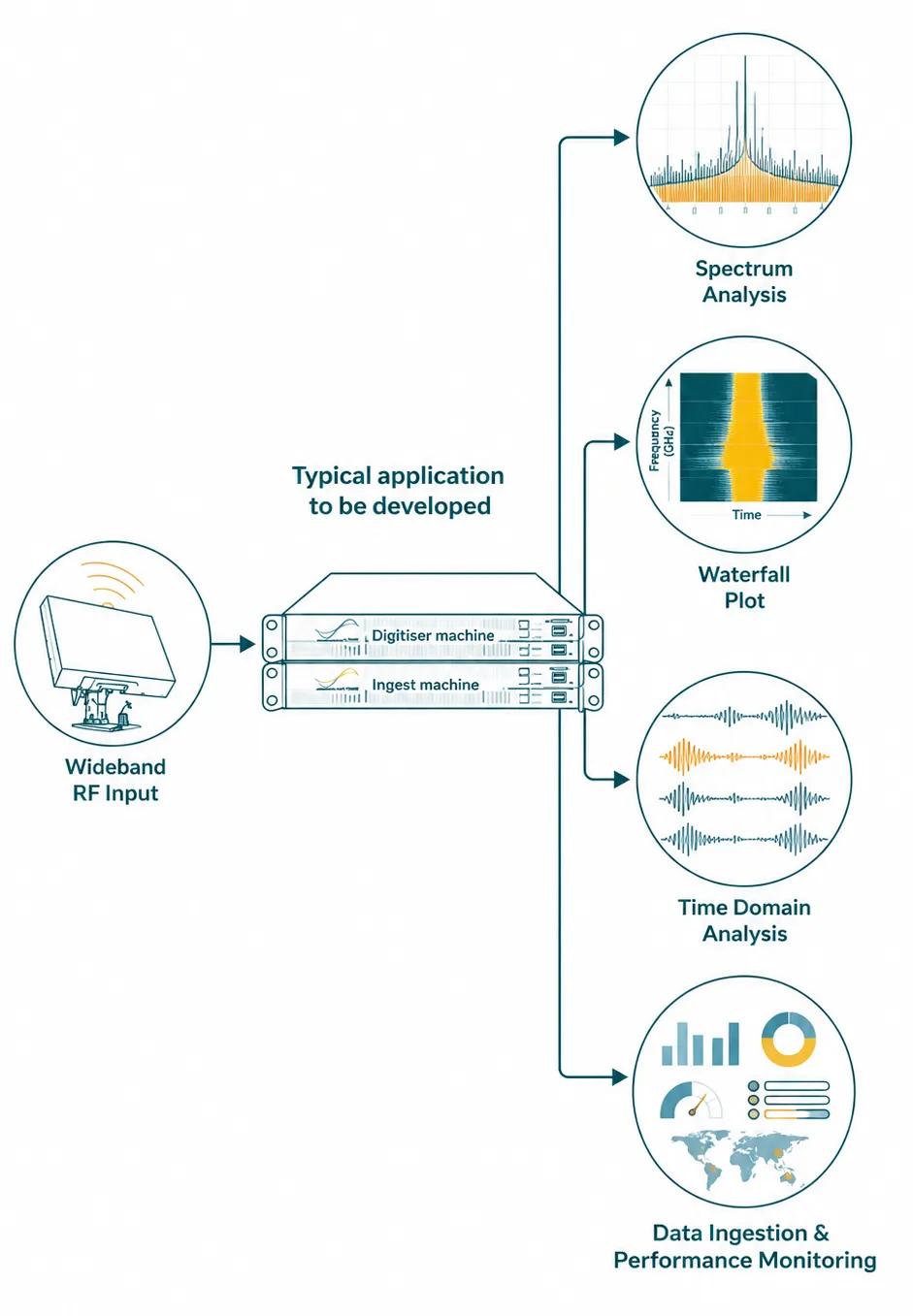
Every application places different demands on the signal path. Frequency range, instantaneous bandwidth, channel count, timing, interfaces, processing requirements and operating environment all affect the final architecture.
WRS combines systems engineering with specialist hardware, firmware and RF capabilities to develop a solution around those requirements.
This may involve adapting an existing WRS product, developing a custom subsystem or integrating several technologies into a complete signal path.
Performance Must Extend Beyond the Laboratory
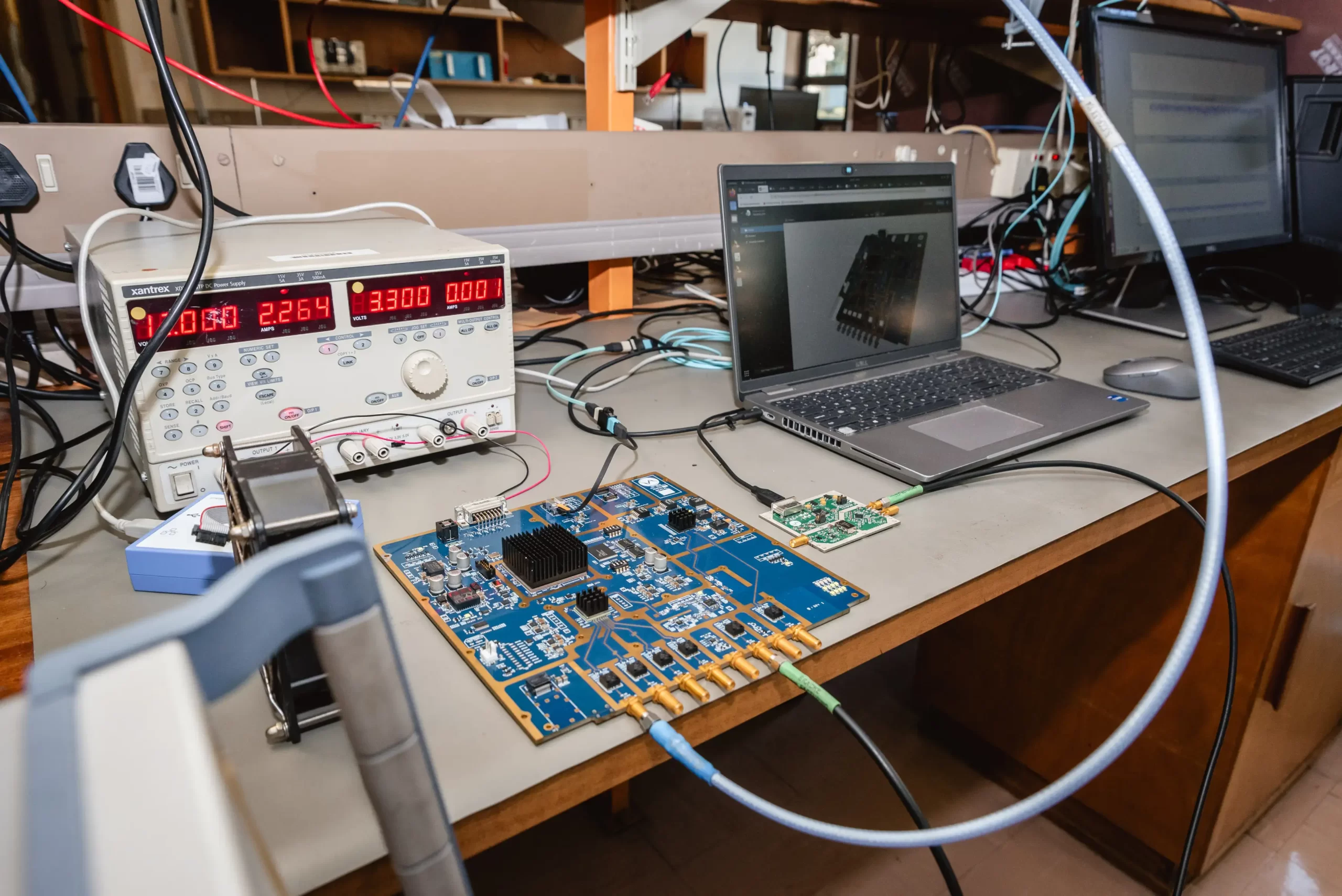
WRS combines electronic, RF and mechanical engineering to address these requirements as part of the system design. This includes EMC hardening, ruggedised enclosures, environmental qualification and the integration of industry-standard data interfaces.
Published aerospace industry material describes a WRS wideband solution designed for harsh environments, with up to 3 GHz instantaneous bandwidth, RF bandwidth up to 6.4 GHz and successful Mil-Std-461G radiated-emissions testing. These specifications should be checked against the current product documentation before being repeated as formal website claims.
Specialist Knowledge Across RF, Digital and Systems Engineering
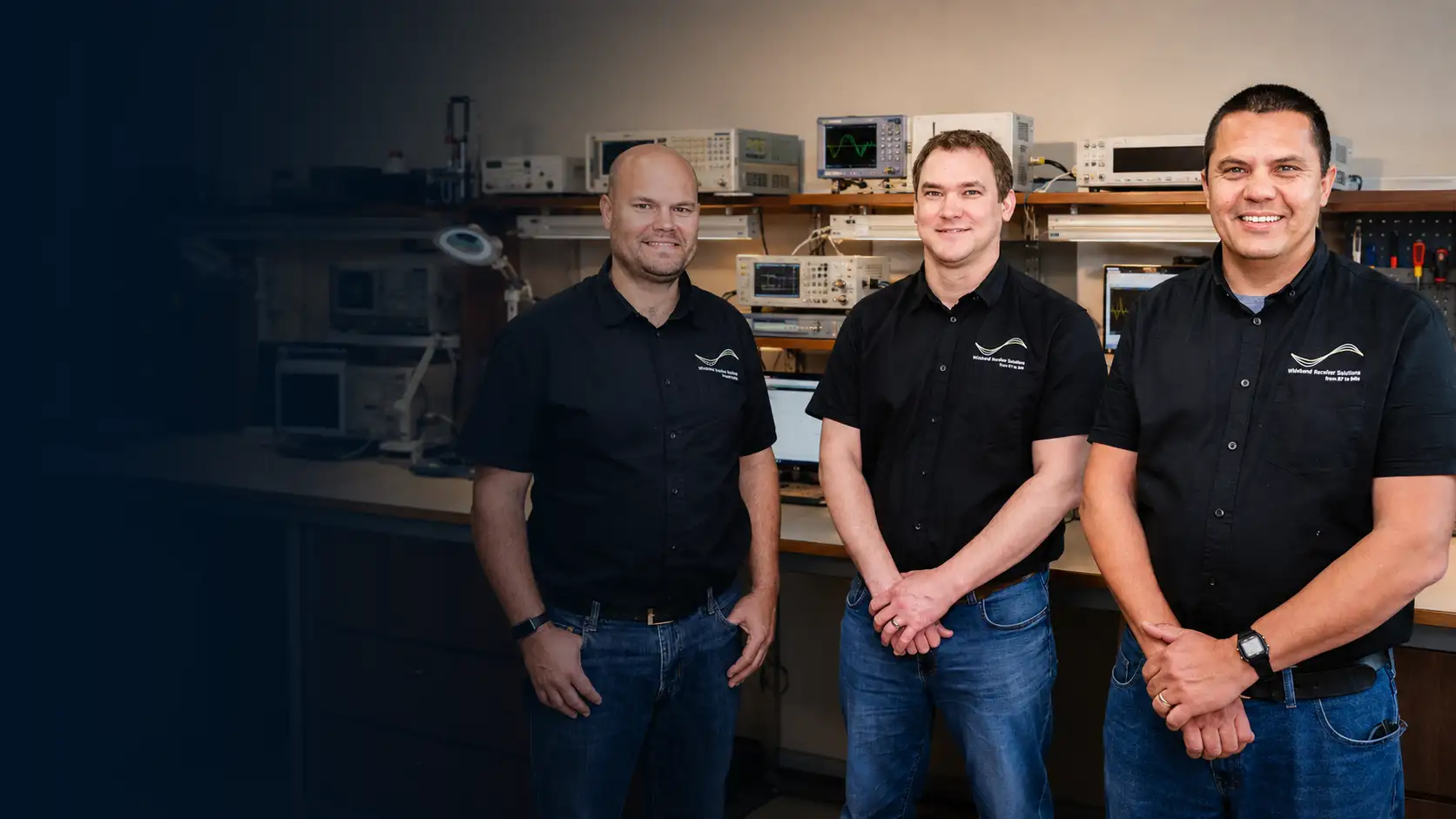
WRS brings together engineers with complementary experience in radio astronomy, receiver systems, time and frequency hardware, RF design, digitisation, firmware, digital signal processing, integration and testing.

Sias Malan
M.Sc. (Eng) (UCT), B-Tech. (CPUT), National Diploma Electrical EngineeringRF Systems Engineering; Systems Engineering; Wideband Receiver Design; Radio Astronomy Receivers.
Radio Astronomy; RADAR; Wideband RF Receivers; High-Speed Digitisation; Defence Communications; Synchronisation & Timing Systems.
Sias earned a BTech in RF and Communications Engineering in 2005 and an MSc in Radio Astronomy with a specialization in RADAR in 2018. He began his career at Tellumat in 2002, advancing from RF Technician to Development Engineer, where he designed and integrated RF communication systems such as C-band power amplifiers and military datalinks. Joined the South African Radio Astronomy Observatory (SARAO) in 2010 to contribute to the KAT-7 and MeerKAT radio telescopes, leading systems engineering for digital back-end systems, high-speed digitizers, and wideband RF receiver systems. Since 2017, he has served as Functional Manager: Receiver Systems, leading the development and production of RF receiver systems for MeerKAT and SKAO.

Henno Kriel
M.Sc. (Eng) (UCT), B.Eng. (US)Digital Signal Processing.
Real time processing.
Henno earned his B.Eng. in Electrical and Electronic Engineering in 2000 and began his career as a design engineer with the South African Air Force and CSIR, specializing in RADAR. He joined SunSpace and Information Systems in 2006 to work on South Africa’s first microsatellite, SumbandilaSAT. In 2008, he joined Reutech Radar Systems to develop the NANSEN Naval Surveillance Radar for the Royal Norwegian Navy as part of NATO. He moved to SKA-SA in 2012 to design and build the MeerKAT 64 Dish Array, specializing in digitization and DSP. In 2017, he joined Garmin SA to work on commercial RADAR R&D products, and later that year joined SARAO to develop high-frequency digitizers and real-time processing platforms.

George Smit
B.Eng. (Electronic and Electrical) (US)Systems Engineering; Satellite Communications; RF Systems Engineering.
Satellite Communications; Radio Astronomy; Spectrum Monitoring; Ground Stations.
George earned his B.Eng. in Electronic and Electrical Engineering from the University of Stellenbosch. He began his career at Surrey Satellite Technology Limited (SSTL) in 2001, developing satellite communication systems for low- and medium-Earth orbit missions. Joined Perpetuum Limited in 2006 to lead the development of wireless communication systems for industrial sensor networks. Returned to the space sector in 2009 as Lead Payload Downlink Engineer at SSTL, developing high-speed X-band transmitters and next-generation satellite communications systems. Joined Space Advisory Company in 2012 to lead satellite communications engineering before joining the SKA programme in 2015 as Lead Systems Engineer for the SKA-MID Dish project, responsible for the systems engineering and delivery of the telescope receptors.

Renier Siebrits
M.Sc. (Eng) (CPUT), M.Tech. (CPUT), B.Tech. (CPUT)RF Hardware Engineering; Time & Frequency Systems; FPGA Firmware.
Radio Astronomy; Satellite Communications; Precision Timing Systems; RF & Fibre Networks.
Renier earned a B.Tech. in Electrical Engineering in 2008, followed by dual Master’s degrees (M.Sc. and M.Tech.) in Electrical Engineering with a specialization in satellite communication systems in 2010. He began his career at Tellumat in 2007, working on digital radios, phase-locked loops, and RF power amplifiers. In 2008, he joined Cape Peninsula University of Technology, contributing to satellite communications research, including the development of an S-Band payload transmitter for the ZACUBE-01 nanosatellite. He joined SKA South Africa in 2012 to support the KAT-7 Radio Telescope and design fibre networks for the MeerKAT Radio Telescope. In 2015, he joined SARAO to develop the MeerKAT Time and Frequency Reference System and has since contributed to the development of the 6 GSPS D-Engine, Ku-Band Downconverter, and advanced receiver hardware.

Omer Mahgoub
B.Eng. (UP), New Managers' Development Programme (2022)PCB design.
Radio Astronomy; Electronic Warfare; RADAR; High-Speed Digitiser Systems; Electronic Hardware Development
Omer earned his B.Eng. in Electronics Engineering from the University of Pretoria in 2007. He joined the CSIR in 2008, where he developed electronic hardware for RADAR and Electronic Warfare systems. Joined the South African Radio Astronomy Observatory (SARAO) in 2012 to develop electronic hardware for the MeerKAT telescope, leading the development of the MeerKAT and MeerKAT+ Digitiser D-Engines and the HMC memory card for the SKARAB processing platform. Appointed Functional Manager: Electronics in 2022, leading multidisciplinary engineering teams responsible for the development of advanced electronic systems supporting the Observatory's scientific objectives.
Engineering for Complex Technical Programmes
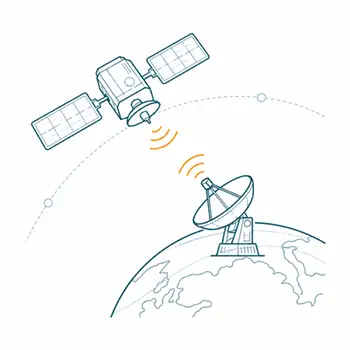
Space and Ground Systems

Defence and Aerospace

Science and Radio Astronomy
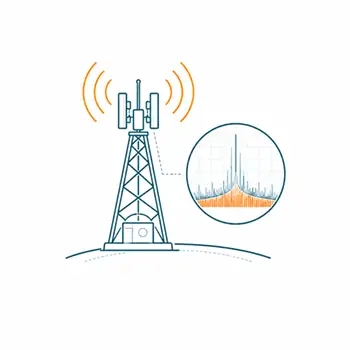
Telecommunications and Spectrum Monitoring

Research and Development
Turning Complex Requirements into Implementable Systems
Our role is to help clients move from a difficult technical requirement to a system that can be built, integrated, tested and supported. We do this by combining specialist engineering disciplines around the needs of the application rather than treating each component in isolation.
Today, WRS continues to develop products, undertake specialist engineering work and find practical solutions to complex RF and digital-system problems.